ROBERT COSTA: Turnover in the White House. President Trump reshuffles his national
security team ahead of critical negotiations. I'm Robert Costa. What it means for U.S.
foreign policy, plus the president's lead attorney in the Russia probe resigns,
tonight on Washington Week.
PRESIDENT DONALD TRUMP: (From video.) I say to Congress I will never sign another bill
like this again.
ROBERT COSTA: A defiant President Trump calls out lawmakers for pushing through a $1.3
trillion spending bill that he considered vetoing just hours earlier.
PRESIDENT DONALD TRUMP: (From video.) As a matter of national security, I've signed this
omnibus budget bill.
ROBERT COSTA: The threat of a government shutdown capped off a wild week of staff
shakeups and surprise resignations.
PRESIDENT DONALD TRUMP: (From video.) Thank you all very much.
ROBERT COSTA: The president continues to reshuffle his foreign policy team, naming John
Bolton to be his third national security adviser.
Does the appointment of Bolton, a hardliner who supports a preemptive strike against
North Korea and Iran, signal a radical shift in foreign policy?
And the revolving door at the White House, it keeps turning with the departure of John
Dowd, the president's lead attorney in the Russia probe, and the addition of a
hard-charging former federal prosecutor, Joseph diGenova.
We discuss it all with Geoff Bennett of NBC News, Nancy Youssef of The Wall Street
Journal, Jackie Calmes of The Los Angeles Times, and Dan Balz of The Washington Post.
ANNOUNCER: This is Washington Week. Once again, from Washington, moderator Robert Costa.
ROBERT COSTA: Good evening. President Trump is rebooting his foreign policy team as
he prepares for talks with North Korea and Iran over their nuclear programs. Next month
he will replace National Security Adviser H.R. McMaster, a three-star general, with
hardline hawk John Bolton, a former U.S. ambassador to the United Nations. Bolton, who has
served three presidents, has been an outspoken advocate of preemptive military strikes.
In 2015, Bolton wrote a controversial op-ed in The New York Times with the headline "To
Stop Iran's Bomb, Bomb Iran." And in February, following the Olympics in South Korea,
Bolton wrote in The Wall Street Journal, quote, "The Legal Case for Striking North Korea
First." Senate Minority Leader Chuck Schumer responded to Bolton's appointment in a
tweet. The New York Democrat wrote "Mr. Bolton's tendency to try to solve every
geopolitical problem with the American military first is a troubling one. I hope he
will temper his instinct to commit our armed forces to conflicts around the globe."
Geoff, when you look at H.R. McMaster, the national security adviser,
was he let go because of a personality clash
with the president, because of a policy difference, or was it because of that leak
earlier in the week of the president's call with Russian President Vladimir Putin?
GEOFF BENNETT: Well, what's so interesting about this is that McMaster's departure had
nothing to do with matters of competence. It really had more to do with the
personality clash between him and the president. They've disagreed over issues of
policy, of course; you have Iran, Afghanistan, and Russia. Remember, last month the
president publicly rebuked McMaster for neglecting to defend his electoral win when
McMaster was speaking more broadly about Russia's election interference.
But on the issues of personality, in McMaster you have a guy who's relentless, he's
aggressive. He's also a scholar. In Army parlance, as one person put it, he's all
transmit, meaning he likes to lecture. And the president was said to have grown bored
and frustrated in Oval Office briefing sessions with that aspect of McMaster's approach.
So what we're told is that one of the reasons that here had been a delay in McMaster
leaving the White House was that the White House wanted to make sure that there was some
sort of soft landing in place so that his ouster wouldn't be as unceremonious as Rex Tillerson's was.
JACKIE CALMES: You know, what's interesting to me about McMaster is this is a man who
took this job and his main claim to fame, aside from his military career of more than 30
years, was that he had written this Ph.D.
thesis turned into a widely read book called "Dereliction of Duty," that was about his
conclusion that biggest mistake of the Vietnam War era was that military officers were
not candid enough with the presidents they served, mainly Lyndon Johnson, and were
complicit with the untruths that were told. And so I think he went in there and his
whole model for operation was to be as candid as possible and live by the very
lesson he took from his research. And candor didn't endear him to Donald Trump.
ROBERT COSTA: So will that candor - with Bolton in and McMaster gone, what kind of
candor does Bolton bring to these conversations with President Trump, especially when it
comes to the Iran nuclear deal, that possible meeting with Kim Jong-un, the head of North Korea?
NANCY YOUSSEF: Well, as you mentioned, John Bolton has some very rigid positions on
North Korea and Iran. He's held those positions for years, at times promoting
preemptive strikes on both North Korea and Iran. Most immediately, he will be a key
person in sort of negotiating in the run-up to the talks that the president said will
happen in May. And we'll see if they do. And so he's in a position where he could
potentially advocate for those talks and try to get the best position for the United States.
Or, he could sabotage them, because remember he will have an advantage that incoming
Secretary of State Mike Pompeo and Defense Secretary Jim Mattis will not have.
He will be in the White House and will be there every day and can really shape the
president's thinking. He doesn't have to get in a car to talk to the president.
He will be there all the time and be the sort of first round of advice that he gets.
And so in that regard, he could be quite influential.
Now, that said, the mitigating circumstance will be all those around them, particularly
the Defense Department, which has warned against any strike and see it as just
cataclysmic in terms of the consequences, and the generals at Central Command and
Strategic Command, who have said that they find that the Iran deal has worked.
And so that will be the balance between what he's hearing in the White House and what
he's hearing around him at key national security positions.
ROBERT COSTA: Dan, we see this throughout history. Sometimes the national security
adviser's a major power player in an administration. Sometimes it's the secretary of
state. I'm told by a person close to Bolton that he does have a pretty strong
relationship with the incoming Secretary of State Mike Pompeo. But what do you make
of the apocalyptic response to the Bolton appointment in some quarters of the political
community? Is Bolton this hardliner coming in?
Is he going to totally disrupt U.S. foreign policy?
Or is he also someone with a long background in Washington, in three administrations?
DAN BALZ: Well, he's been in many administrations. And he's had establishment mentors.
And he's - you know, in recent years he has come forward much more as a hardliner.
I mean, I think that there are a couple of things about him that we'll have to watch.
It's one thing to be a Fox News analyst as an expert on foreign policy and state your
views in the way you think they ought to be done or the policies that you would favor.
It's another thing to be in the White House advising a president and have that
responsibility on your shoulders. And so I think that the one thing to watch is the
degree to which he tempers himself a bit in the kinds of things he says.
I think that when you look at this new team you have to think that Pompeo is likely to
be the strongest member of that team, because he has a longer relationship with Donald
Trump than any of them, other than Secretary Mattis. But he's got a comfort level with
the president that I'm not sure any of the rest of them have. Bolton will have to
develop that. He obviously has some of it. But there are a lot of people in the foreign
policy community who are alarmed by his appointment. Richard Haass, the president of
the Council on Foreign Relations, tweeted today that we're in one of the most perilous
moments in recent U.S. history, in part because of this nomination.
ROBERT COSTA: And if you look at what's happening, that comfort level Dan's talking
about, the president appears to be moving to that comfort zone across the board inside of
this White House. And you've been reporting and editing on it all week.
You look at the appointment of Larry Kudlow to be the White House's economic advisor,
Peter Navarro ascendant with these new tariffs on China.
You have, of course, McMaster gone and Bolton coming in.
What is - what's happening inside of the White House that's making the president move in
this direction? Is it an ideological shift, a personal shift, a transition?
JACKIE CALMES: I think it's a personal shift, a matter of personal style. The president
doesn't really have an ideology. And so these are people, you know, commonly - these are
people that appear on TV a lot, which he likes. I remember in 2015 he told Chuck Todd
that when Chuck said, where you get your advice? And he said, I get it from the - I
watch the shows. And now he's not only watching the shows. Even though he's got all the
best advice in the world, he's bringing people from the shows into his administration.
And, you know, one thing they have in common is like, you know, these jobs we've talked
about - whether it's Bolton as national security adviser or Larry Kudlow as economic
advisor, head of the National Economic Council, those two jobs within the White House are
jobs that are - you are supposed to be an honest broker and not hold forth with your own
opinion so much as bring the opinions of the administration to the president and lay out
options. And these are both two people that you cannot see standing by and not expressing.
GEOFF BENNETT: You make a great point. And I think what we're seeing is the continuation
of a trend that is - we've seen sort of develop over the last two weeks, with the exit of
Rex Tillerson, of H.R. McMaster, of Gary Cohn - internationalists, sometimes people
derided as globalists within the White House. But these are all people who have tried to
put some guardrails around the president's hawkish sort of America first instincts.
And now that they're being replaced by John Bolton, by Mike Pompeo, those guardrails,
those brakes are off. And this is all happening just weeks ahead of crucial decisions
that could really affect the role of the U.S. for decades.
ROBERT COSTA: But why is this happening? I mean, is it because there are
allegations of infidelity out there on the president that are on cable television,
which he watches by the hour? There's a lot of political pressure from Capitol Hill
on different fronts. Why is this happening?
NANCY YOUSSEF: Well, the indications that we're getting is, frankly, is that he's
feeling more comfortable in the job. And rather than needing to hear from people
who sort of offer conflicting views, he's forming his own sort of comfort level.
So rather than looking for people who may disagree with him, but he seems to be forming a
circle of people who actually validate how he thinks national security policy should be
carried out. So in some ways it's an argument for someone who feels more comfortable.
I would point out, though, as we talk about Bolton, there is one key area where he
disagrees with the president, which is on Russia. He has called Russia a foe.
After the Salisbury attacks where a suspected Russian spy was poisoned, as was his
daughter, Bolton tweeted out that he wanted stronger measures against Russia. That's very
different than President Trump, who's called for talking to Russia and, of course, notably
congratulated Vladimir Putin on his election win Sunday, despite advice to the contrary.
ROBERT COSTA: Dan, you used to go up to Trump Tower, meet with then-candidate Trump,
26th floor in New York. Didn't have a chief of staff. Flat structure. Everyone would
could to that office and meet with him. Is that where we're going with this White House?
DAN BALZ: I don't know whether we are. There are some people who are speculating.
Stephen Bannon has speculated that if General Kelly leaves as chief of staff that the
president will not replace him, he'll just have a different kind of structure.
Bob, I think that in part what we're seeing is the transition that never happened the
first time. That transition, as we know, was rocky. It was not well-organized.
And they made a lot of very hasty decisions.
And I think what you've seen now as the president has spent enough time in office and has
gotten to know different people, some he has found comfort with and some he has clearly
not. And he is sorting through that at this point and repopulating his
administration in a way that he's most comfortable.
ROBERT COSTA: And he's repopulating it elsewhere, because let's talk about another
significant change in the president's inner circle this week. John Dowd, Mr. Trump's
lead attorney in the Russia investigation, resigned. The 77-year-old lawyer
reportedly encouraged the president to cooperate with Special Counsel Robert Mueller.
But as we were just saying, Steve Bannon, the former chief strategist, he suggested that
Dowd was perhaps fired for not being aggressive enough or talking too much about cooperation.
STEPHEN BANNON: (From video.) I think that's why essentially more aggressive attorneys
got brought in that are now - you know, I think President Trump's going to war.
I think it's very obvious he's going to go to war on this.
ROBERT COSTA: Trump did hire former federal prosecutor Joseph diGenova to join his team.
He is a Washington lawyer known for defending the president and attacking the special
counsel investigation on cable news. When you look at diGenova - excuse me.
I'm Italian, I sometimes can even mispronounce an Italian name. (Laughter.) I mean -
JACKIE CALMES: I'm glad you said it because I'm just going to use the pronoun "he."
ROBERT COSTA: DiGenova. My grandparents would be unhappy with that.
(Laughter.) But when you look at him coming in, he's a lot like Kudlow, a presence the
president has seen on television - same with John Bolton. But the real story also
seems to be, Jackie, white-shoe attorneys in Washington are turning down the offers
from the White House. Ted Olson said no thanks. A lot of other law firms, we're
told, have said no thanks because of the political risk involved, or conflicts.
JACKIE CALMES: Yeah. Well, you know, from the very beginning when the president - when
you saw the lawyers that he surrounded himself with - Michael Cohen, Marc Kasowitz - and
the others he's brought in - John Dowd subsequently - I mean, it was just open talk
in Washington about how is it that a man who's the president of the United States
could have much a low-wattage, second-rate legal team around him?
And so then he started to bring in people, or tried to, that were more reputable.
ROBERT COSTA: Dowd, Ty Cobb.
JACKIE CALMES: Exactly, and he - but he just - the way he's treated them is now, you
know, who would - who would - of any repute would want to go in and work with him?
And I think that's what we've seen when people like Ted Olson said no this week and
others that you mentioned.
GEOFF BENNETT: And Ted Olson said that he's turned down the Trump legal team twice, this
last go-round said he was apprehensive at best about joining them and about accepting
their request. And you mentioned the fact - the way that John Dowd was treated.
Of course, one of the reasons he said he stepped down was because he was frustrated, one,
that the president wasn't taking his advice, but also that the president was also
bringing in other people to the legal team, to include Joe diGenova.
And don't forget Marc Kasowitz, who's another tough talker, buy guy type - (laughs) - is
also still in the president's ear even though he officially stepped down in his lead
capacity leading the legal team as it relates to Russian matters last year.
So he could still be in the loop here too.
And this is all happening as there are ongoing face-to-face negotiations between the
Trump legal team and representatives from the special counsel about a face-to-face
meeting between Robert Mueller and President Trump.
ROBERT COSTA: Where do those stand?
GEOFF BENNETT: Well, they've been saying this for months, right, like this face-to-face
testimony is expected to happen.
But the Trump legal team has been trying to limit the scope of that interview by
providing key documents related to different moments throughout the investigation that
the special counsel team wants more information about so that those questions may not
come up in the interview with the president.
DAN BALZ: The president has said, you know, any number of times I would like to testify
personally; and yet, it's been clear for months that the lawyers around him think that is
a bad idea. And so it will be interesting to see as he brings on new lawyers whether
that posture changes, the degree to which those negotiations take a different turn
about will he or will he not testify in person, will it have to be in writing.
And I think that's a very big question, and it's a very - I mean, if you're his attorney,
that is a very tough decision to have to make on his behalf, particularly when he keeps
saying I want to do it.
ROBERT COSTA: And we've seen the posture turn a little bit with a - in a significant way
in how he goes after the Mueller probe. For months his attorneys kept saying, Mr.
President, lay off the tweets about Bob Mueller, but yet in recent days he's been
tweeting about Bob Mueller - more combative than ever.
NANCY YOUSSEF: By name, and that was something that we hadn't expected because of all
the implications behind it, because of the message it was sending, because of the fears
that he could fire Mueller and that that was maybe a trial balloon to see the reaction to
that, and at a time where even Republican senators have come out and called that a red
line. And so some interpreted the decision to start using him by name and sort of
floating the idea as his attempts to sort of see whether that would be allowed, where
was that line, was it a real red line or was there something short of that that he
can do. And so these tweets are just seen in the context always of this
investigation, and his ways possibly to shape it or impact it.
ROBERT COSTA: I spoke to Senator Flake this week, of Arizona, and he's brought up
impeachment if the president fires Mueller without cause.
JACKIE CALMES: And Lindsey Graham.
ROBERT COSTA: And Lindsey Graham of South Carolina did the same.
But there doesn't seem to be a move, Jackie, to protect Mueller with legislation.
JACKIE CALMES: No, and you know, it's interesting how they've put a lid on that.
And I'd note one thing that happened this week: both Paul Ryan, the House speaker, and
Senate Majority Leader McConnell came forward and told reporters on Capitol Hill that
they have assurance from the president, from the White House, that he will not fire
Mueller, so legislation isn't necessary. He's fine. He's not going anywhere.
Well, the same two leaders - McConnell and Ryan - also said yesterday in no uncertain
terms that they had talked to the president and he'd promised them he would sign the 1.3
trillion (dollar) spending bill, only to wake up this morning like the rest of us and see
Trump's tweeted that he's thinking of vetoing it.
In the end he didn't veto it, but it does make you wonder, if that assurance about his
signing it was not 100 percent locked in, how reassured should we be about the talk that
Mueller isn't going anywhere, that Mueller will be allowed to finish his investigation?
GEOFF BENNETT: And it's a really difficult thing to test in the abstract, right, to ask
Republican lawmakers or any lawmaker for that matter how would you react if the president
took steps that ultimately led to the ouster of the special counsel.
So, you know, we'll have to see if we ever get to that point.
But again, you know, it's fairly remarkable that I think in many ways the president felt
emboldened sending out that trial balloon via tweet based on the fact that he did not get
the necessary, I guess, pushback that he expected he would get from Republicans.
ROBERT COSTA: He's so unpredictable. It was a hot week I sometimes say in the
newsroom; just every day something new. And more happened today, Friday, because
despite a Friday-morning veto threat, the president signed off on a $1.3 trillion
funding package to keep the federal government operating through September.
Standing next to the more than 2,200-page legislation, Mr. Trump warned lawmakers that
he would never again approve such a bill, citing unnecessary spending on some programs
and, of course, insufficient funding for his promised border wall. He also called out
Democrats as talks continue to stall over the status of undocumented immigrants known
as DREAMers. We see the president right now on - he's erupting, Dan, and he's saying
I don't want - I want my wall, I want the money for the wall, I'm unhappy with
congressional leaders just like I'm unhappy with my legal team, I'm unhappy with
different facets of my administration; yet, he still signs the bill.
DAN BALZ: Well, I think he probably had no choice but to sign the bill in the end, and I
think everybody assumed that he would.
And I think that the tweet he put out this morning is his way of kind of blowing off
steam, and when he says I'll never sign another bill like this I think also that is
potentially a hollow promise, although we may not go through another where we have an
omnibus like this. But, you know, I think it's a reminder to Republicans and
everybody on Capitol Hill that he's going to operate the way he sees fit for himself,
that he's not going to play ball in a team way. He wasn't part of these
negotiations, and so he was going to say I'm washing my hands of it.
JACKIE CALMES: But his team was. DAN BALZ: His team was, but that's not the president.
ROBERT COSTA: Only Trump speaks for Trump. DAN BALZ: (Laughs.) Right.
JACKIE CALMES: That's true.
ROBERT COSTA: And beyond all the drama, there was a big development with
the military in the spending in this package.
NANCY YOUSSEF: Right. I mean, he brought up military spending repeatedly in his
announcement today, $60 billion more than last year.
What was interesting is, you know, at the Pentagon they're stressing readiness and
training and maintenance parts of this budget, and yet he was stressing the nine new
aircraft that he's going to build, the 14 ships, the toys if you will.
And it was an interesting dichotomy because you haven't heard the Pentagon talking about
procurement. They've talked about sort of getting back to basics.
And he was really focused on these multibillion-dollar platforms - the F-35, more Black
Hawks, even an aircraft carrier, two destroyers.
I mean, these are kinds of developments and building of equipment that we haven't seen in
a long time, and also just so embraced at a time when there are so many strains on the
military because of all the 17 years of war and the implications behind it.
ROBERT COSTA: Any concerns in the White House, Geoff, about the spending here, over a
trillion dollars? The GOP or the Tea Party movement, they were deficit hawks.
Has that just faded away?
GEOFF BENNETT: And I think that's what influenced the president's tweet this morning.
Remember - he said something in his speech that struck me. He said there were parts
of this bill that we were unhappy about, but it reflected our priorities for the most
part so I had to sign it. That's exactly what Budget Director Mick Mulvaney told
reporters in the White House Press Briefing Room yesterday. He came out and answered
his own hypothetical question. He said is the bill perfect, no, but reflects our
priorities so the president's going to sign it. Of course, the difference between
those 24 hours as the president sent that tweet suggesting that he wouldn't.
I think what he was trying to do was trying to thread the needle.
He was trying to reflect the concerns among the conservative base who tried to cast this
bill as wasteful government spending and framed his change of heart through this lens of
trying to do what was right for the military.
As we know, the president often views the military as one of his constituencies.
And so, you know, he couldn't necessarily throw away the argument made by Defense
Secretary Jim Mattis that the military needed this funding.
ROBERT COSTA: So true. And final thought, Jackie. You look at the president,
everything we've discussed tonight. He's calling his friends late at night like
Congressman Mark Meadows of North Carolina. He's watching cable television.
And despite what his advisors say, he's saying I'm going to go in a different direction.
JACKIE CALMES: Well, you know, the direction he's going is not going to win him any
battles in Congress. And it's - and to the extent there's all this chaos, it's the
last thing in the world that the Republicans want in this midterm election year
because he today, you know, put it - he's triangulating so that it's against the
Republican-controlled Congress, and this is not going to help his party in the
midterm elections as they struggle to hold onto their majorities.
ROBERT COSTA: We're going to have to leave it there. Thank you so much, Geoff,
Jackie, Dan, Nancy. Always a pleasure. And thanks, everybody, for watching tonight.
And our conversation, as ever, will continue on the Washington Week Extra, where we will
preview this weekend's March for Our Lives, the whole march in Washington and in states
from coast to coast that will address school safety and gun regulations.
Plus, those three pending lawsuits against President Trump.
You can watch it online later tonight and all week long at PBS.org/WashingtonWeek.
I'm Robert Costa. Have a great weekend.
 For more infomation >> Miley Cyrus Performs 'The Climb' At The March For Our Lives - Duration: 4:09.
  For more infomation >> Demi Lovato Performs At March For Our Lives In Washington, D.C. - Duration: 4:51.
  For more infomation >> March For Our Lives: Students Rally On Washington - Duration: 5:57:50.
  For more infomation >> MLK Jr's granddaughter: I have a dream ... enough is enough - Duration: 2:27.
  For more infomation >> Washington: una respuesta nunca vista sobre las armas de fuego | Noticiero | Telemundo - Duration: 2:39.
  For more infomation >> EN VIVO: 'March for our Lives' en Washington, DC (en español) - Duration: 3:06:20.
  For more infomation >> Live coverage and analysis of the March for Our Lives - Duration: 7:19:17.
 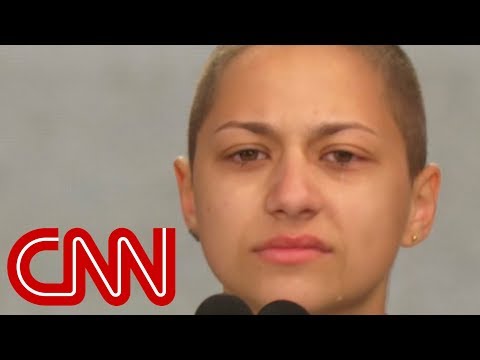 For more infomation >> Emma Gonzalez gives speech at March for Our Lives rally - Duration: 7:02.
  For more infomation >> Estudiantes de todo el país viajan a Washington para participar en la 'Marcha por nuestras vidas' - Duration: 1:51.
  For more infomation >> Students From Around U.S. Converge On Washington To March, Help Make A Change - Duration: 3:32.

Không có nhận xét nào:
Đăng nhận xét