ROBERT COSTA: Hello. I'm Robert Costa. And this is the Washington Week Extra, where we
pick up online where we left off on our broadcast.
Joining me around the table, Yamiche Alcindor of the PBS NewsHour, Erica Werner of The
Washington Post, Julie Hirschfeld Davis of The New York Times, and Mark Landler of The
New York Times. Two big primaries this week. In Arizona, Representative Martha McSally
won the Republican nomination to replace retiring Senator Jeff Flake. McSally retired
from the U.S. Air Force after serving two decades there and the was the first female
fighter pilot to fly in combat. She'll face Democrat Kyrsten Sinema, a member of
Congress, in the fall. And in Florida, one of the country's largest swing states,
Tallahassee Mayor and Senator Bernie Sanders-backed Andrew Gillum, he was the winner
in the Democratic primary for governor.
Representative Ron DeSantis, backed by President Donald Trump, won the Republican
nomination, but DeSantis quickly stirred up controversy in comments on Fox News.
REPRESENTATIVE RON DESANTIS (R-FL): (From video.) He is an articulate spokesman for
those far-left views and he's a charismatic candidate. And, you know, I watched those
Democrat debates; none of that was my cup of tea, but I mean, he performed better than the
other people there, so. The last thing we need to do is to monkey this up by trying to
embrace a socialist agenda with huge tax increases and bankrupting the state.
ROBERT COSTA: DeSantis denied his comments were racially motivated.
Yamiche, we don't know, as David Brooks said on the NewsHour, what's in the congressman's
heart, but to have race immediately injected into this gubernatorial contest, what does
it tell us about the midterms this year?
YAMICHE ALCINDOR: Well, I'll say one thing. There's - race was already included in
this because Florida's never had a black governor, so there is this idea that we were
going to be talking about race anyways because he was already - Andrew Gillum is the
first black Democrat nominated for governorship. So that was going to be there.
I think race is also a big thing because I'm from Florida; there's a big racial divide
between South Florida, where I grew up, which is really I would say the Caribbean there's
so many immigrants there, and the rest of Florida which is majority-white and very much
more like the South. That said, when you talk about a black man who's educated and you
say the word "articulate," you say that he performs well, and then you follow it up by
saying the word "monkey," you should know better. If he didn't know better, he should
absolutely have known better. The moment I heard it, especially the way that he said
"monkey," I thought - I sat back in my chair and thought this is so problematic.
So I think that he really needs to own up to the fact that that was something that he
shouldn't have said. He needs to apologize for saying it. And the fact that Fox News
came out and said we apologize, that we are not part of this, that's something - that's a
really big move for Fox News, which of course has had its own issues with racially-charged language.
ROBERT COSTA: Gillum backed by Senator Sanders.
Are we seeing the Democratic Party move a little left in the months ahead of November?
ERICA WERNER: Yeah, really interesting outcome in that both parties kind of showed, you
know, the - what they are in this political season as far as the Republican side, you get
the guy who Trump backed and pulled from behind in the polls to winning, showing, you
know, how Trump is the kingmaker in these primaries. And then on the Democratic side,
as in New York with Joe Crowley's seat, you see that a progressive can overcome polling
and expectations and win. And so it's going to be really interesting to see what happens
when these two face off in the general election and it'll be very telling as to what
direction Florida and maybe even in the country wants to go.
ROBERT COSTA: Trump does seem to be the kingmaker on the Republican side, but Arizona's
a little different. Martha McSally was at first wary of attaching too close to Trump,
but by the end it was all about Trump, and you saw that in Florida with DeSantis.
JULIE HIRSCHFELD DAVIS: Absolutely. I mean, as Erica said, he endorsed DeSantis.
He didn't endorse in the three-way primary in Arizona, but all three of the candidates -
all three of the Republican candidates hugged Trump as hard as they could, even in the
week after John McCain's death, and he was a Navy pilot, war hero.
You might think a candidate like McSally would want to associate herself with him, try
to, you know, draw in some of the voters who kept on sending him back to the Senate from
Arizona, but she didn't mention him at all. She talked about being a supporter of
President Trump's agenda. And of course, Joe Arpaio was - you know, he called Trump
more of a hero than McCain because he was on the receiving end of a pardon from him.
And so the candidates really, I think, have embraced this idea that if you want to win a
primary you really have to hug Trump hard.
The question is really going to be, I think, in the next couple months, whether that gets
you over the finish line of a general election when you have a lot of voters who are
repelled by the idea of Donald Trump - certainly Democrats, but even some independents
and some of the Republicans who may have supported him in 2016.
So it'll be interesting to see how those numbers may change, or maybe they will not.
ROBERT COSTA: Why aren't the Democrats talking about impeachment as much as we may have
thought months ago, that there will be this big push against President Trump?
And of course, some of the elements of the party are doing that - Tom Steyer, the
billionaire donor, leading an impeachment push - but a lot of the Sanders wing seems to
actually be pushing for other issues: a higher minimum wage, more economic and health
emphasis in their - in their call.
MARK LANDLER: Well, there's - a lot of Democrats feel that impeachment's a distraction
and ultimately you need to be talking about issues people care about.
I think, though, that - to talk about these new Washington Post poll numbers that show
this relatively high number of people that are open to impeachment, that regardless of
what the party leadership - whether you're on the progressive end or the establishment,
regardless of how reluctant they feel about impeachment, I think they're going to find it
a very tough pressure to tamp down. I think there is enough fervor out in the
grassroots to push impeachment that, should they take the House, I think they'll
face enormous pressure not to - not just to hold hearings, but to act on those hearings.
YAMICHE ALCINDOR: And I'll say, in talking to voters after Andrew Gillum won - and even
though this, obviously, is a governor's race - there were so many people that said, well,
as soon as the Democrats can just get the House back we'll impeach President Trump.
So in some ways I wonder if these candidates know that their voters know what the deal is
and that there's an elephant in the room, that they don't have to say we're going to
impeach President Trump because with all the reporting that Axios did this week, with
that long list of investigations, some of the stuff I forgot was things that we did know:
Where's the president's tax returns? Why did he fire James Comey? There are all
these things that Democrats want to know. So even if they don't impeach him, all
these investigations could end up becoming an impeachment process in and of itself.
So I think Democrats are smart to say, hey, Hillary Clinton won on an - or Hillary
Clinton lost running against just Trump, saying I am not going to be Trump; maybe what we
need to do is actually have a Democratic agenda so that years down the line, when we
don't have President Trump, we can still say, hey, this is what our party stands for.
ROBERT COSTA: When you look at President Trump's schedule, he's going to be a lot of
places but he can't be everywhere. And there was a POLITICO report this week that said
that now the National Republican Congressional Committee, the campaign arm of the GOP
in the House, they're going to have to make some tough decisions because Republicans
still face that blue wave even if President Trump's helpful in a lot of places.
ERICA WERNER: Yeah, there is the suggestion that, you know, as far as the money spigot
for Republican candidates, you have 23-seat majority currently and maybe 45 Republicans
who are quite vulnerable. Well, the party can't lift all those people up, so they're
starting to talk about who do we cut off because they're just not going to make it.
Those are going to be difficult decisions, obviously, but necessary.
I mean, it's all about survival and it's about keeping the majority for Republicans
because in the House, if you have the majority, even if it's a one-seat majority, I mean,
it's going to be incredibly difficult to get anything passed, but you control all the
gavels, and that's really going to be what matters to the Trump administration.
ROBERT COSTA: And Trump can go to a big rally, but who are they sending to the suburbs
from the White House, Ivanka Trump?
JULIE HIRSCHFELD DAVIS: Well, that's a great question because, you know, we just saw
President Trump tweeted that he was going to have a big rally in October for Ted Cruz in
Texas, who is facing a rising Democratic challenger in Beto O'Rourke. And he said, you
know, I want to rent the biggest arena I can. He loves these big arena rallies.
That's what gets him going. That's what makes him feel like he's needed and like he
is the star, which is what he wants out of these events, and it's also what
Republican candidates want out of these events, but it is a good question.
Some of these more vulnerable Republicans really need him to come to their little small
high school on the outskirts of the city where they really need to get voters excited to
come out and vote for them in November, and he is not going to want to play those places.
The few times when we've seen him go to venues like that he makes comments publicly about
how I never go someplace this small, and so, you know, to get him where he needs to be to
help Republicans get across the finish line is going to be a challenge.
Maybe it will be Ivanka Trump or Mike Pence, or who knows.
ROBERT COSTA: Mike Pence seems to take a lot of those gigs.
JULIE HIRSCHFELD DAVIS: Mike Pence does do a lot - a lot of those gigs.
(Laughter.) He's going to be a busy man.
ROBERT COSTA: That's true. I mean, he was at the Capitol for Senator McCain.
I mean, it's almost like a rock band when they say we won't play clubs anymore, we're
only going to play arenas. (Laughter.)
Speaking of rallies, at a political rally in Indiana on Thursday, President Trump
repeated one of his common themes, calling the mainstream media "fake news." Mr.
Trump has had a contentious relationship with the press - that's not news, of course -
but he's been singling out news organizations and whipping up crowds at his rallies for
over a year now and even before then during the campaign. But it's reached a new level.
The Boston Globe spearheaded a series of editorials nationwide speaking out on behalf of
a free press earlier this month. And this week, a man was accused of calling The Globe
the enemy of the people and he was charged with threatening violence against the
newspaper and its journalists. Mark, you've - I mean, we've all been at rallies, but you've
been recently covering the president. And so have you, Julie, I know, and everybody has.
When you hear about the threat to The Globe, the shots from the president, the punches
at the press, expected. But the violence that seems to be creeping into some
of these attacks on the fringe, it's unsettling to say the least.
MARK LANDLER: It is. And, you know, one of the things that has developed over time in
President Trump's campaign against the press is he started off with the phrase
"fake news," which is derisive and I think inaccurate and offensive to all of us.
But it's not the same as what he has more recently taken to saying, which is "the enemy
of the people." That's a really loaded phrase. It has, you know, a deep historical
provenance. It was used in totalitarian states and Stalinist Russia, in Nazi Germany.
And when you label any group the enemy of the state, you're really declaring them, to
some extent, open season, that they are a group that can be victimized. I don't know
whether President Trump has that historical perspective or that sensitivity.
I do know that members of the press, including the publisher of my newspaper, have
personally asked the president, appealed to the president not to use that phrase and that
language. But he persists, as recently as this week he tweeted it yet again.
So when you see episodes like the threats against The Boston Globe or the mass shooting
at the Annapolis newspaper, which, you know, to be sure was not in any way connected to a
Trump supporter, it's happening within a context, within an atmosphere and an environment
that the president is really contributing to creating.
And so this language, the continued use of this language does trouble me.
And, you know, one of the interesting nuggets that came out of our publisher's visit
with the president several weeks ago was that he mentioned to the president that
newsrooms around the country were beginning to hire armed guards to guard the newsrooms.
And President Trump's response to my publisher was to say I'm surprised they weren't
doing that already, so, you know, sometimes you wonder how much the president thinks
these issues through.
But this type of language in particular is so incendiary that I think that's, you know,
one of the contributing factors and something that I hope we will see less of over time.
YAMICHE ALCINDOR: I went to a Trump rally in Charleston, West Virginia.
And I started - I end up - I ended up interviewing people about Jim Acosta because so
many people were yelling and screaming about him in particular.
And it got to the point where I kind of got concerned. And I'm someone who covered
Ferguson, who covers Baltimore protests, who doesn't really get rattled.
I've never really gotten rattled at a Trump rally in all the times I went on campaigns,
and that's speaking as an African-American woman where there were sometimes white
nationalists there. Never had a problem. But the level of anger that I got and
that I received when I - when I was watching people yell at Jim Acosta made me pause.
And people were saying, well, he's the fake news and he wants to let - he wants this
president to go. And it made me think that if Robert Mueller does come out with the
report and it does say this president broke the law, that he obstructed justice and
then we start reporting on that, I don't know how people are going to take that.
I don't know if they're going to be able to receive the evidence if there is evidence
that this president did something wrong. And that, to me, is the thing that worries me.
Yes, it's the media aspect of it, but it's also we're pushing out facts and if you don't
like those facts, I don't know how people would - how people might lash out.
JULIE HIRSCHFELD DAVIS: Well, and that is the point - YAMICHE ALCINDOR: Right.
JULIE HIRSCHFELD DAVIS: - right, I mean, from the president's perspective.
I don't know, like Mark said, whether he has a historical perspective of these terms that
he's using and if he's trying to incite this kind of feeling.
But I think he does very well understand the result and he has a desired result which is
for people to say everything we're reading, everything we're seeing on the news, with the
exception of Fox News, is wrong, is discredited, is fake, is meant to bring somebody
down. And it is actually quite frightening to think of the prospect that something like that
would happen, we would all report it, and, you know, would there be some sort of an
uprising? Would people feel enabled by the president's rhetoric to really take
action rather than just talk about how much they hate the media?
ROBERT COSTA: And it's about information generally. You think about the president's attacks
are on the media - against the media, but also against Google and social media companies.
ERICA WERNER: That's right and kind of against experts of all kinds, right?
Scientists, you know, university professors, that sort of thing.
And unfortunately, it's been effective based on polling that shows that - and I don't
remember the numbers, but the standing in which journalists are held has sunk and there's
more than a majority, I believe, of people who think that we do make up stories and that
we do fabricate sources, which, of course, we don't. So it really is quite troubling.
And I believe the president has in fact acknowledged that this is what he's trying to do,
right, to make it so that he is the one who's believed and that no one else is believed.
And I think Yamiche is right, that when the time comes for Bob Mueller to say whatever
it is he has to say, however damning or not that turns out to be of the president, we'll
report it, a lot of people won't believe it unfortunately.
ROBERT COSTA: Well, that's the question I'm always asking myself and my colleagues is,
what are we supposed to be doing?
Because if that happens, right, if there is a new breaking point in the media where
people are questioning the press and there's real attacks on the press, part of my
reaction is just keep reporting, just keep telling the story. But is there anything
else we should be doing or thinking about as journalists? I don't know.
YAMICHE ALCINDOR: I think it's always reporting and it's always respecting people.
It's really trying to bring people and show people what you do. The idea is that I
always think that no one - no one owes me an interview, no one owes me time in their home.
So when I go and I talk to people, I've always had a pretty pleasant experience and I
would say that at Trump rallies.
I wrote a story about people who voted for Obama and then voted for President Trump, and
this was before the election where things were very, very high and people were very
angry. And again, I'm an African-American woman with an afro walking through a Trump
rally saying, who voted for Obama? That's a kind of tough thing to do.
People were pleasant to me because I was pleasant to them.
So I think that if you meet enough people like that and you report the facts, that's all
you can really do because I can't convince you if Robert Mueller comes out either for or
against it because there could be Democrats that are very mad.
If Robert Mueller says, actually, everything the president did was fine, there was no
evidence of wrongdoing, we don't know what people might do on the other side.
People might be very, very angry.
If the Republicans keep the House and Robert Mueller says the president's cleared, there
could be a whole other side of the country that says can we really do another two years
and what that could mean. So I think people - I think as journalists, our jobs are
just to report and be respectful to people.
JULIE HIRSCHFELD DAVIS: Yeah, I mean, I think you have to continue to report the ways in
which the president is attacking these issues. Right?
I mean, the fact that he is, his behavior when it comes to this investigation, when it
comes to the media is very much similar to what you seen in authoritarian societies, is
an important comparison to make. It's also important to talk to people, as Yamiche
said, all over the country who come from different perspectives in order to, you know,
make it clear that not everyone is singing from the same song sheet, not everyone has
the same perspective. But facts are facts.
And so I think it's really important, even in an environment where we are under constant
attack, that we keep on trying to talk to the primary sources and keep on reporting what
we see. Because the opposite, frankly, is what Donald Trump seems to want and what a
lot of leaders in countries that don't have the freedoms that we have here tend to want.
And, you know, we just have to keep on doing the job.
ROBERT COSTA: We'll leave it there for now. And we'll leave it there for the
Washington Week Extra. Thanks for joining us. And while you're online, check out our
Washington Week-ly News Quiz. I'm Robert Costa. We'll see you next time.
 For more infomation >> Presidents, Washington Elite Bid Farewell To Senator John McCain - Duration: 2:03.
  For more infomation >> Cindy McCain lays wreath at Vietnam Memorial - Duration: 2:03.
  For more infomation >> Watch Live: John McCain remembered | Obama, Bush give eulogies at Washington funeral - Duration: 4:05:45.
  For more infomation >> Family, dignitaries eulogize McCain at funeral - Duration: 3:58.
  For more infomation >> Watch McCain's funeral live - Duration: 5:41:22.
 For more infomation >> Washington Celebrates Life & Legacy Of Sen. John McCain - Duration: 2:08.
  For more infomation >> Despiden a John McCain en emotiva ceremonia celebrada en Washington - Duration: 4:12.
 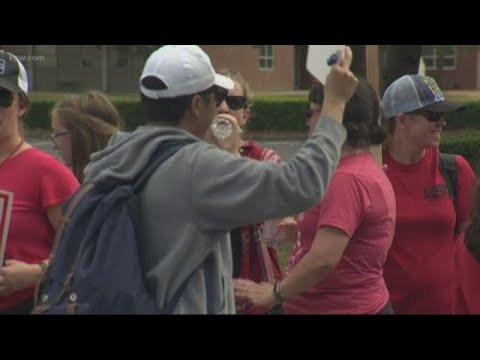 For more infomation >> Washington teachers still on strike - Duration: 2:23.
 For more infomation >> Arcadia wins 38-30 in an offensive showdown against Washington - Duration: 3:48.
 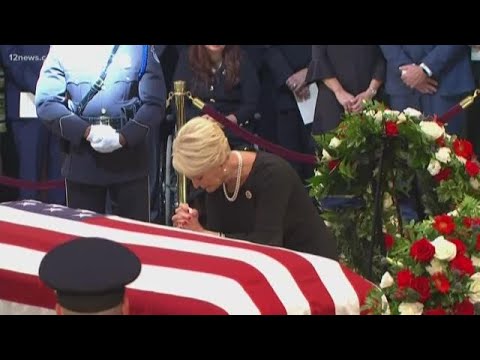 For more infomation >> Looking ahead to Sen. John McCain's Washington D.C. memorial service - Duration: 1:30.
 For more infomation >> Washington pays tribute to John McCain - Duration: 1:30.
 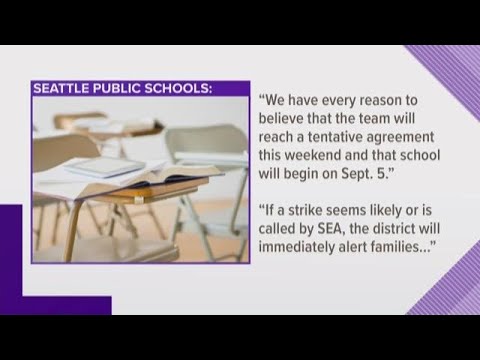 For more infomation >> A weekend of negotiations for many school districts in Washington - Duration: 2:16.

Không có nhận xét nào:
Đăng nhận xét