Vermont was the 14th state to be admitted to the Union on March 4th, 1791, 279 days
after Rhode Island, the 13th state, joined the Union on May 29th, 1790.
Vermont is the second least populated state in the nation with a mere 620,000 inhabitants.
This places the state directly ahead of the last populated state, Wyoming, with approximately
40,000 more inhabitants, and directly behind Alaska with 120,000 less inhabitants.
Vermont has an area of 9,616 square miles, making it larger than 5 states.
It borders the Canadian province of Quebec in the North, New Hampshire in the East, Massachusetts
in the South, and New York in the West.
It's location places it in the Eastern time zone.
The highest point in Vermont is the peak of Mount Mansfield at 4,395 feet above sea level.
This peak is located in the Green Mountains, a range running for an approximate 250 miles
from the state's border with Massachusetts to the Quebec border.
The lowest point in Vermont is Lake Champlain at 95 feet above sea level.
The largest city in Vermont population wise is Burlington with an approximate population
of 42,000 in the city proper and 220,000 in the metropolitan area.
Within the Burlington metro area is the second largest city, South Burlington, with 19,000
inhabitants.
The state capital, Montpelier, is the 6th largest city in the state, with an approximate
7,500 inhabitants.
This city became the capital of the state in 1805.
Montpelier is located within Washington County, one of the fourteen counties in Vermont.
The most populous of these is Chittenden County, with around 160,000 inhabitants, containing
both Burlington and South Burlington.
The least populated county in Vermont, Essex County, is located in the Northeast along
the Quebec and New Hampshire borders, and has an approximate population of 6,000.
The modern flag of Vermont was adopted on June 1st, 1923, and, unlike most states in
the Union, has changed greatly throughout its history.
The first flag used by Vermont is known as the Green Mountain Boys flag, originally serving
as the regiment flag of the Green Mountain Boys militia, consisting of blue canton with
misaligned stars on a field of green.
From 1777 to 1791 when Vermont joined the Union, this flag served as the flag for the
Republic of Vermont; a republic independent of both the British and New York, who has
claimed the area as their own.
The republic would become a state of the United States in 1791, sticking with the same flag
until 1804.
The state adopted its second flag on May 1st of 1804, appearing similar to the American
flag with 'Vermont' written in the top stripe.
This flag, however, has 17 stripes and 17 stars as opposed to the thirteen and fifty
we have today.
This was because the original intent was to add both a star and stripe to the flag with
every new state.
Meaning in the modern day, the U.S. flag would have 50 stars and 50 stripes.
This design naturally looks worse and worse as more states are added, so the stripes remain
at thirteen and the stars continue counting.
This would be rectified when the third flag of Vermont, adopted on October 20th of 1837,
would have 13 stripes and a single large star containing the state coat of arms.
The modern flag was adopted in 1923, consisting of the coat of arms on a field of blue.
The pine branches on either side of the shield represent the branches worn by soldiers at
the Battle of Pittsburgh in the War of 1812.
The tree in the center symbolizes the vast forests of Vermont, while the cow and wheat
represent the dairy, agricultural industries prevalent in Vermont.
The deer head above the shield represents the wildlife of the state.
Finally, both 'Vermont' and the state motto of 'Freedom and Unity' and displayed
under the shield.
The first European to explore Vermont was Frenchman Samuel de Champlain in 1609, claiming
the area around Lake Champlain for France and coining the name 'Green Mountains'
[les Verts Monts].
This French translation is also the roots of the name 'Vermont'.
The first settlement in Vermont, Fort Sainte Anne, would be established by the French in
1666, expanding the French influence in the area and furthering their claims over the
Vermont area.
Several other early settlements would be established by both the French and the English, however
the first permanent European settlement in Vermont was established in 1724 by the English
in the form of Fort Drummer.
Following the end of the French and Indian War, the Treaty of Paris was signed in 1793,
ending New France's control of Vermont subsided and opening the area up to settlement from
elsewhere; most notably New York, Connecticut, Massachusetts, and New Hampshire.
This would lead the Province of Massachusetts bay to claim Vermont, pointing to the 1629
charter of the Massachusetts Bay Colony for legitimacy.
The New York province would also lay claim to the region, citing the grant given to the
Duke of York in 1664.
New Hampshire was also able to justify a claim to the area, based on an order by King George
the second issued in 1740.
Between 1749 and 1764, over one hundred land grants [135 total, 131 towns] would be issued
by the governor of New Hampshire, Benning Wentworth, which are now known as the New
Hampshire Grants.
Shortly after this, King George III would establish the boundary separating New Hampshire
and New York's claims, delegitimizing New Hampshire's claims and officially giving
Vermont to New York.
This upset many inhabitants of Vermont, leading to the creation of the Green Mountain Boys
in 1775 under the leadership of Colonel Ethan Allen.
This group was relatively small, having less than a hundred members, but played an important
role in the American revolution and, more particularly, the formation of the Republic
of Vermont.
Originally, the new nation's name was New Connecticut, however Vermont - an imperfect
translation of 'Green Mountain' was later adopted.
The republic would hold a convention in Windsor, where 72 delegates met to adopt the new constitution.
This constitution was not only the first written constitution to be created in North America,
but also the first to prohibit slavery (although this was not strongly enforced), and grant
all men the right to vote, regardless of property ownership.
The republic minted it's own coins and operated an independent postal service, however would
cease to exist in 1791 when the republic was admitted to the Union - the first state to
join the original thirteen.
The only major battle to involve Vermont during the American Revolution occurred outside of
the state's borders in New York.
Despite its namesake of Bennington, Vermont, the Battle of Bennington occured about ten
miles [16 km] outside of Bennington.
General John Stark would lead his American troops to victory against the British here,
leading to the creation of Bennington Battle Day, a Vermont specific holiday observed annually
on August 16th.
Following the Union's independence, Vermont was admitted to the Union in 1791 as the 14th
state.
More than 30,000 Vermonters would serve in the Civil War, around 5,000 of which would
die.
Following the Civil War, Vermont's economy would be primarily agricultural and dairy
based, both of which continue to be prevalent today.
The state would put an increased effort in being environmentally friendly around this
time, with around 90% of the state's energy being supplied by hydropower in 1940.
Vermont continues to be an integral member of the Union, and played a crucial role in
the formation of our nation in the first place.
This is Morrethy.
Thanks for watching.
 For more infomation >> UNITED STATES vs EUROPEAN UNION | Military Comparison (2018) - Duration: 3:31.
 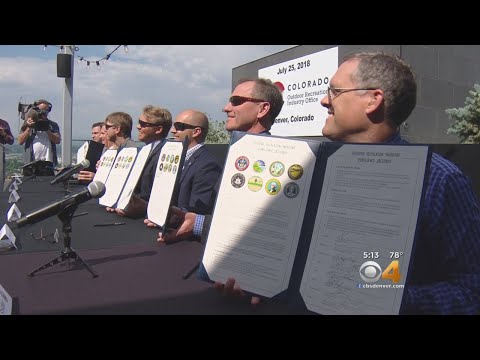 For more infomation >> Colorado Joins Other States To Give Outdoor Industry A Voice - Duration: 0:45.
  For more infomation >> The economic fallout from states drowning in debt - Duration: 3:55.
  For more infomation >> NBC News / Marist Poll: 2/3 Of Voters In Key States Want To Give Someone Chance | MTP Daily | MSNBC - Duration: 1:46.
  For more infomation >> I-485 Adjustment of Status For United States of America - Duration: 13:36.

Không có nhận xét nào:
Đăng nhận xét